The "Invisible" Interface: Why API-First Development is the Future of SaaS
Introduction: The UI-First Mistake Historically, when a company decided to build a new software product, they started by drawing screens. They designed the dashboard, built the buttons, and wrote the backend code to make those specific buttons work. If a client later asked, "Can this connect to our CRM?", the developers had to scramble to bolt an API (Application Programming Interface) onto the side of the finished product.
This creates clunky, brittle software. At Cloudvexa, we flip this process upside down. We use API-First Development.
1. What Does "API-First" Actually Mean?
API-First means treating the API as the primary product, rather than an afterthought. Before our developers write the code for the graphical user interface (what you see on your screen), they design and build the API (how the software talks to other software).
Think of it like building the electrical wiring of a house before deciding what color to paint the walls. The "wiring" is what actually makes the house functional.
2. Seamless Integrations from Day One Modern businesses do not use just one software tool; they use dozens. Your SaaS needs to talk to your payment gateway, your email provider, and your internal databases. Because we build the API first, our software is born ready to integrate. You aren't locked into a closed ecosystem; you can plug our product directly into your existing workflows without needing custom development work.
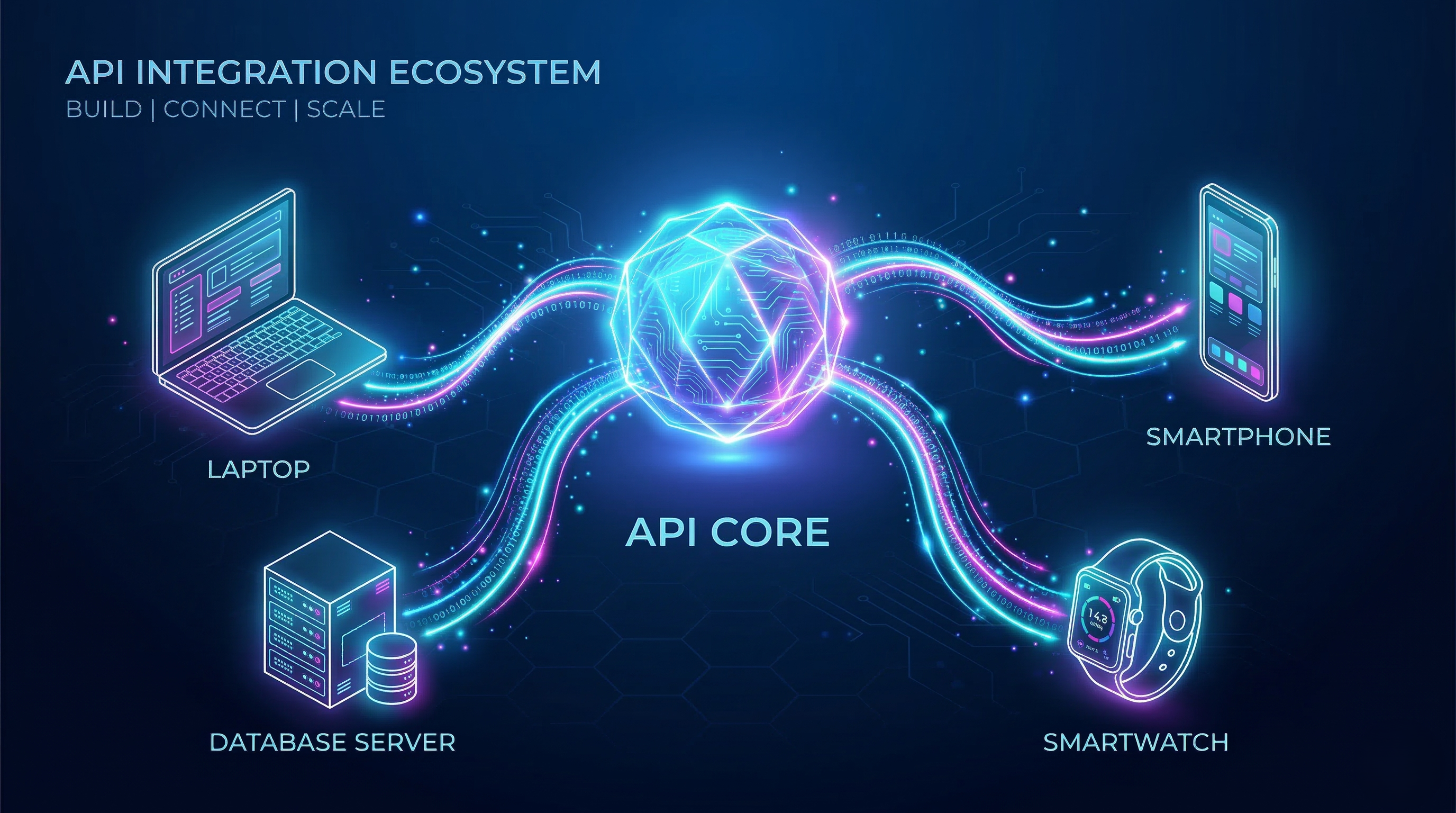
3. The "Omnichannel" Advantage Users expect to access software on their laptop, their mobile phone, and sometimes even their smartwatch.
- The Old Way: Developers had to write different backend logic for the web app and the mobile app, doubling the work and creating inconsistencies.
- API-First: The web app and the mobile app both plug into the exact same API. If we update a feature in the core API, it instantly works across all devices. This guarantees a consistent experience no matter how you log in.
4. Faster, Parallel Development When the API is designed and agreed upon at the very beginning, it acts as a strict contract. Once that contract is set, our frontend team (building the screens) and our backend team (building the databases) can work at the exact same time without waiting for each other. This drastically speeds up how fast we can deliver new features to you.