Navigating the Software Development Lifecycle: A Non-Technical Founder's Guide
So, you have a brilliant app idea that will change your industry. The vision is clear, the market is ready, but the path from concept to a live, functional product feels like a maze. This is where understanding the Software Development Lifecycle (SDLC) becomes your most powerful tool. It’s the structured process your IT partner uses to transform your idea into reality, and knowing its phases turns you from a passive observer into an active, informed collaborator.
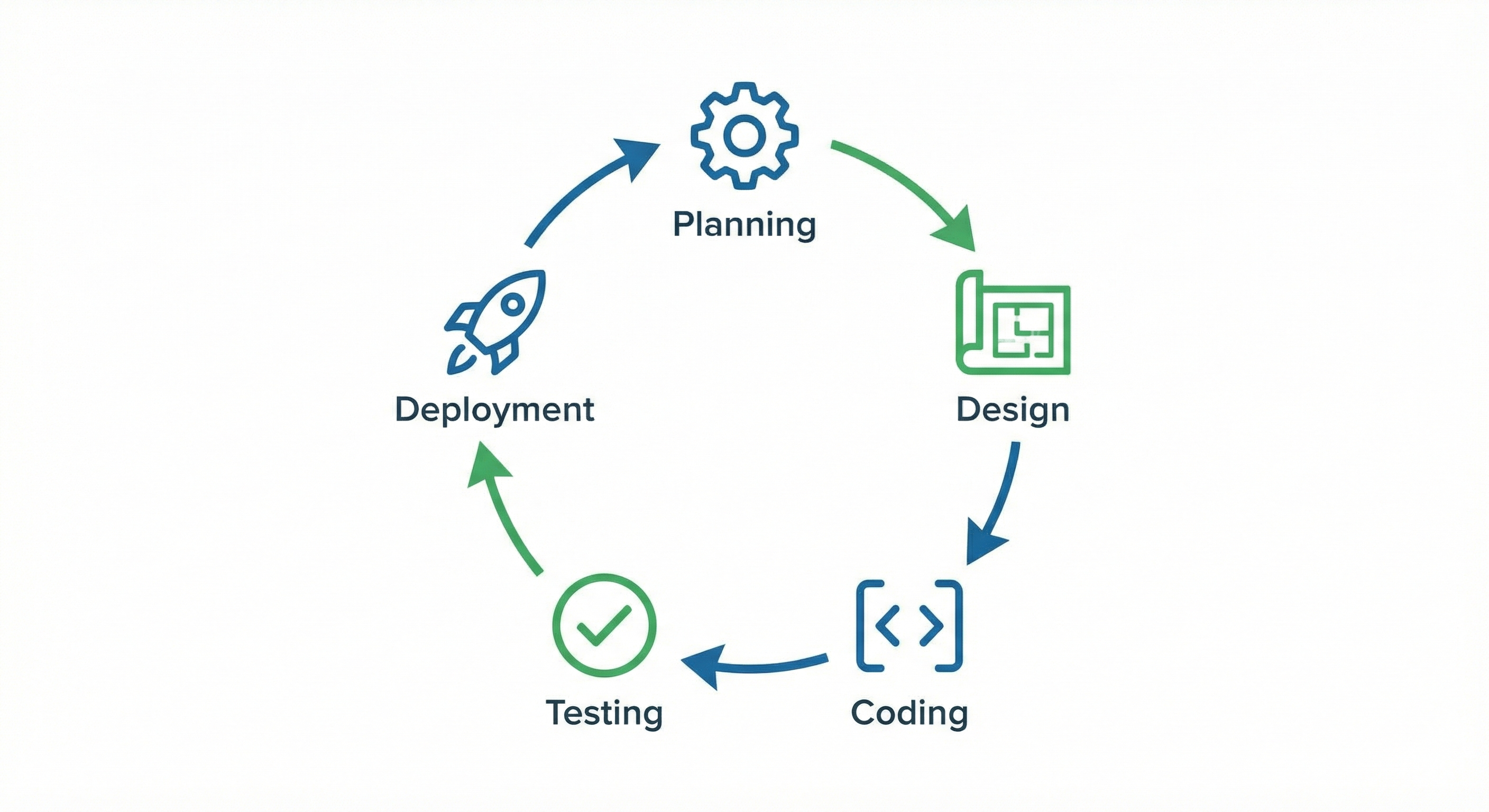
Think of the SDLC as a detailed roadmap. It begins with Requirement Analysis & Planning. Here, we sit down (often virtually) and dive deep. Who is the user? What problem are we solving? What are the must-have features versus the nice-to-have ones? This phase is all about asking questions and defining the project's scope, timeline, and resources. A clear plan here prevents costly misunderstandings later.
Next comes System Design. This is the architectural blueprint. Our architects and senior developers decide on the technology stack (the programming languages, frameworks, and databases), the system's structure, and how different components will interact. We might create wireframes and prototypes to visualize the user journey. As a founder, your feedback on these designs is crucial—they are the first tangible glimpse of your product.
Then, the Implementation (or Coding) Phase begins. This is where developers write the actual code. But it’s not a silent, isolated process. We work in agile sprints—short, iterative cycles—delivering small, working pieces of the software regularly. You'll see demos every few weeks, allowing for continuous feedback and ensuring the development stays aligned with your vision.
Once a piece is built, it moves to Testing. Our Quality Assurance (QA) engineers put it through rigorous trials: functionality, performance, security, and usability. They hunt for bugs so your users don't have to. This phase isn't just about finding faults; it's about ensuring quality, stability, and a seamless user experience.
After passing testing, the software enters the Deployment stage. We carefully launch the application to a live server, making it accessible to your users. This is often done in stages, perhaps starting with a limited beta release.
Finally, the cycle doesn't end at launch. Maintenance & Evolution is the ongoing phase. We monitor performance, fix any emergent issues, and release updates for new features, security patches, and improvements. Your product is a living entity that grows with your business.
Understanding this lifecycle demystifies the development process. It empowers you to ask the right questions at the right time, provide valuable feedback, and build a true partnership with your IT team, setting the stage for your product's success.